The Hellenic Navy (HN) (Greek: Πολεμικό Ναυτικό, Polemikó Naftikó, abbreviated ΠΝ) is the naval force of Greece, part of the Greek Armed Forces. The modern Greek navy has its roots in the naval forces of various Aegean Islands, which fought in the Greek War of Independence. During the periods of monarchy (1833–1924 and 1936–1973) it was known as the Royal Navy (Βασιλικόν Ναυτικόν, Vasilikón Naftikón, abbreviated ΒΝ).The total displacement of all the navy's vessels is approximately 150,000 tons.The motto of the Hellenic Navy is "Μέγα το της Θαλάσσης Κράτος" from Thucydides' account of Pericles' oration on the eve of the Peloponnesian War. This has been roughly translated as "Great is the country that controls the sea". The Hellenic Navy's emblem consists of an anchor in front of a crossed Christian cross and trident, with the cross symbolizing Greek Orthodoxy, and the trident symbolizing Poseidon, the god of the sea in Greek mythology. Pericles' words are written across the top of the emblem. "The navy, as it represents a necessary weapon for Greece, should only be created for war and aim to victory."...............The Hellenic Merchant Marine refers to the Merchant Marine of Greece, engaged in commerce and transportation of goods and services universally. It consists of the merchant vessels owned by Greek civilians, flying either the Greek flag or a flag of convenience. Greece is a maritime nation by tradition, as shipping is arguably the oldest form of occupation of the Greeks and a key element of Greek economic activity since the ancient times. Nowadays, Greece has the largest merchant fleet in the world, which is the second largest contributor to the national economy after tourism and forms the backbone of world shipping. The Greek fleet flies a variety of flags, however some Greek shipowners gradually return to Greece following the changes to the legislative framework governing their operations and the improvement of infrastructure.Blogger Tips and Tricks
This is a bilingual blog in English and / or Greek and you can translate any post to any language by pressing on the appropriate flag....Note that there is provided below a scrolling text with the 30 recent posts...Αυτό είναι ένα δίγλωσσο blog στα Αγγλικά η/και στα Ελληνικά και μπορείτε να μεταφράσετε οποιοδήποτε ποστ σε οποιαδήποτε γλώσσα κάνοντας κλικ στη σχετική σημαία. Σημειωτέον ότι παρακάτω παρέχεται και ένα κινούμενο κείμενο με τα 30 πρόσφατα ποστς....This is a bilingual blog in English and / or Greek and you can translate any post to any language by pressing on the appropriate flag....Note that there is provided below a scrolling text with the 30 recent posts...Αυτό είναι ένα δίγλωσσο blog στα Αγγλικά η/και στα Ελληνικά και μπορείτε να μεταφράσετε οποιοδήποτε ποστ σε οποιαδήποτε γλώσσα κάνοντας κλικ στη σχετική σημαία. Σημειωτέον ότι παρακάτω παρέχεται και ένα κινούμενο κείμενο με τα 30 πρόσφατα ποστς.........

Friday, January 17, 2014

Veterans "Lone Survivors" ...[ 3372 ]

Veterans are not just heroes or victims
By Eric Liu
January 16, 2014 -- Updated 1736 GMT (0136 HKT)
Watch this video

Wahlberg: People NEED to know about this 

Editor's note: Eric Liu is the founder of Citizen University and author of several books, including "The Gardens of Democracy" and "The Accidental Asian." He served as a White House speechwriter and policy adviser for President Bill Clinton. Follow him on Twitter @ericpliu

,
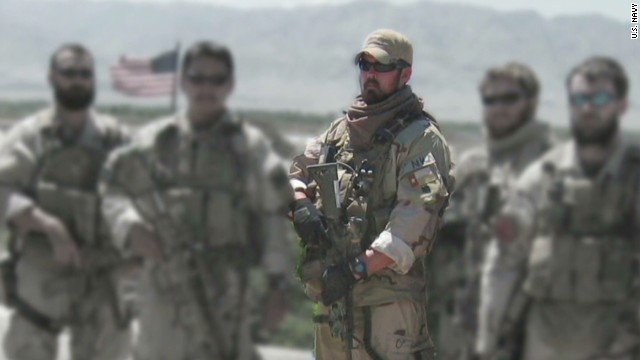
(CNN) -- "Lone Survivor," based on the true story of an ambushed Navy SEAL team in Afghanistan, was the No. 1 movie in America last weekend. If you haven't seen it, go see it.

The movie reminded me of a phrase, "citizenship on the cheap," which has haunted me since I heard retired Army Gen. Stanley McChrystal utter it last summer. He was launching the Franklin Project, an ambitious initiative to expand national service in America. But he was talking about something deeper -- the widening divide between civilians and those coming out of the military.
.

Because the Iraq and Afghanistan wars have been fought by an all-volunteer force, the great majority of Americans have only passing acquaintance with the sacrifices of national defense. Most Americans have not been asked to do anything more for their country during wartime than to thank the troops.

Eric Liu
Eric Liu

That's why McChrystal has called for a rapid expansion of voluntary civilian service programs like AmeriCorps, so more civilians join those who serve in uniform. I couldn't agree more. I'd go further, in fact, and mandate national service, whether military or civilian. That, however, is a pipe dream when our nation can't even fully tolerate mandatory health insurance coverage.
,

How, then, can American society aspire to something greater than citizenship on the cheap? Perhaps the answer lies not in trying to make more Americans serve but in enabling more veterans to serve in new ways when they come home.
.

There are more than 2.6 million Iraq and Afghanistan veterans today. As our country's longest wars wind down, a million more are expected to return. These are people with leadership skills, professionalism, experiences solving complex problems under high stress while keeping a larger mission in mind. Think America could use a few (million) good men and women like that?
.

'
Lone Survivor' rocks the box office

 
Essay: Real story behind 'Lone Survivor'

Meet two of them, Rodrigo Garcia of Student Veterans of America and Chris Marvin of Got Your 6.

Got Your 6 is military parlance for "got your back" and Marvin, a former Army Blackhawk pilot, founded this national campaign to bridge the military-civilian divide. It activates celebrities, social media, political and cultural leaders, and every other resource available to advance a simple message: Veterans are assets.
.

This may seem obvious. But consider the two dominant images of veterans in everyday culture, from movie screens to school assemblies to corporate advertising. One is the hero. The other is the victim.
.

The hero narrative portrays veterans as Medal of Honor winners with superhuman courage, amputees undaunted by their disabilities, and, yes, lone survivors of hellish battles. The victim story portrays veterans as sufferers of post-traumatic stress disorder, wounded warriors betrayed by bureaucracy, combat leaders now left homeless and jobless.
.

To be clear, both narratives have a basis in reality. More veterans than can be counted have indeed been damaged by war, and more than can be counted are indeed heroes of war. They have earned every bit of support, care, honor and gratitude we offer them -- and often more.
.

But the hero and victim portrayals emphasize two messages: that vets belong on a pedestal, and that vets need your compassion. The veterans I know are looking for a third message: Vets can be great citizens back home.
.

Consider Garcia, from Student Veterans of America, a Marine veteran who in the crowded years since his deployments has gone to graduate school, started businesses, led Student Veterans of America's expansion to many hundreds of campuses nationwide, and helped run a state veterans affairs department.
.

The question for civilians is how to create more channels for people like Garcia to continue being contributors and leaders in public service -- not as pilots or infantry commanders but as candidates for office or school principals or heads of nonprofits.
.

How we do this is simple. We just do it. We foster relationships between veterans and civilians. We hire, connect, mentor and invest in veterans. We support organizations like The Mission Continues and Team Rubicon that plug veterans into community service. We learn from them about how to show up for others.
.

It's often said that "freedom isn't free." That's true. Freedom is dear. So is great citizenship, and so is deep gratitude. If we truly want to thank veterans for their service, let's make sure each one who returns from war is empowered to be an integrated, vital part of their community's social fabric and civic life.

Entertainment...[ 3371 ]

Photo : The year in entertainment

By Lisa Respers France, CNN
.
,
After Star Spangled Banner-gate, Beyonce made them bow down during the Pepsi Super Bowl XLVII Halftime Show in New Orleans in February.

Airbus '' Beluga.''..[ 3370 ]

Airbus' Beluga: Inside the world's strangest-looking airplane

By Miquel Ros, for CNN
January 17, 2014 -- Updated 0152 GMT (0952 HKT)
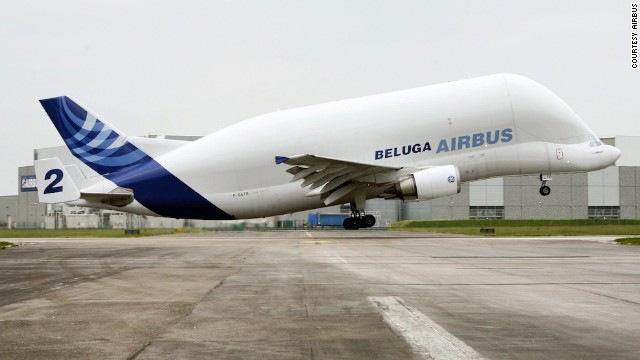
The Beluga isn't serially produced, making each an "artisan" product. The A300-600ST Super Transporter can carry a payload of 47 metric tons (103,616 pounds) over a range of 900 nautical miles.

The Beluga takes off

(CNN) -- If you ever find yourself in the French city of Toulouse, you might just see one of the oddest-looking aircraft in the world.
Popularly known as the "Beluga," because of its strong resemblance to the white Arctic whale, the Airbus A300-600ST (ST stands for Super Transporter) is unique not only in appearance, but also for the essential role it performs in European aviation.
Airbus' production centers are scattered all over the continent, a legacy of its origins as a pan-European consortium.
Each factory specializes in the completion of a specific section of an aircraft.
The five Belugas, all operated by Airbus, link these plants and take the different aircraft sections to the final assembly line, either in Toulouse or Hamburg.

From guppies to belugas
Until the mid-1990s, Airbus used another funny-looking aircraft to perform its big transporting jobs -- the "Super Guppy," a derivative of the Boeing C-97, a military cargo version of the 1940s Boeing 377 Stratocruiser.
The Super Guppy was already outdated by the time Airbus started using it.
Worse was the fact that Airbus was relying on a couple of old aircraft from its chief rival, Boeing, to handle the bulk of its logistics chain.
If it was to keep up with its frantic growth, Airbus concluded it needed something better.
The airframe chosen for the job was taken from the Airbus A300-600, an aircraft that already had a successful track record with airlines such as Lufthansa, Air France and American Airlines.
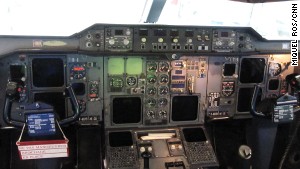
The Beluga is operated by a crew of three: two pilots and a loadmaster.
.
Each of the five Belugas in operation are, actually, Airbus A300-600 jets that have been modified to carry large cargo.
The top section of the aircraft was cut and an additional, wider fuselage section -- resembling a bubble -- was added to the airframe, giving it its characteristic hump.
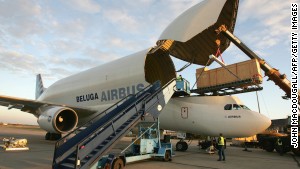
The cockpit was lowered, making it possible for the cargo hold to be loaded and unloaded through the front of the aircraft.
The result is an incredibly spacious cargo hold.
Although the Beluga's maximum payload of 47 tons is surpassed by a handful of other cargo aircraft, its voluminous hold makes it suitable for transporting oversized, but not particularly heavy, cargo. Like aircraft parts.
The Beluga can carry the wings of an A340 airliner or a fuselage section for Airbus' newest wide-body aircraft, the A350.
But it's not large enough to transport parts for the A380 super jumbo.
Those need to travel by boat, barge and road.
Belugas have occasionally been chartered to fly satellites, helicopters and even works of art.
Delacroix's "Liberty Leading the People" flew from Paris to Tokyo on a Beluga -- the canvas wouldn't fit into any other plane.

The Beluga transported this container holding a five-meter-high Egyptian statue from Berlin to Paris.
The Beluga transported this container holding a five-meter-high Egyptian statue from Berlin to Paris. 
 
Coming up: Beluga XL
With the Beluga nearing two decades of indefatigable service, it's starting to show its age and limitations.
Since the Beluga's maiden flight in 1994, Airbus has multiplied aircraft deliveries by nearly five.
The company has become more global, diversifying its supplier base and opening assembly plants in China and Alabama -- well outside the Beluga's relatively short range of 1,500 nautical miles with maximum payload.
In order to cope with the increasing workload, Airbus has put in place the so-called "Fly 10,000" program.
The program aims to optimize the company's logistics infrastructure by increasing the work performed by its transport fleet to 10,000 hours per year by 2017.
The plan includes the Beluga, which will be expected to fly many more hours per day.
With aircraft order books at a historic maximum, however, Airbus can't afford to bet its vital logistics operation chain on the readiness of five aging aircraft.
Though no decisions have been made, Airbus is looking at potential replacement solutions.
Tentatively called Beluga XL, the Beluga's replacement is likely to be based on the A330 airframe.
It's expected to have a longer range and be able to carry a heavier payload, while still being able to land at airports with relatively short runways, such as Broughton, England, where Airbus makes wings for its airliners.
The next generation Beluga should also make it possible for Airbus to double its number of cargo flights to 120 per week.
What seems assured is that the Beluga XL is going to look similar to the current version, something plane spotters passing through Toulouse should appreciate.

Miquel Ros is an aviation blogger. An economist by background, he's worked for Flightglobal and Bloomberg. He currently covers the airline industry through Allplane.tv and other online media.

Aποχαιρέτησαν την Κρήτη με συρτάκι....[ 3369 ]

Ζορμπάς αλά ισπανικά στο αεροδρόμιο Ηρακλείου

Πρώτη καταχώρηση: Παρασκευή, 17 Ιανουαρίου 2014, 15:00// Zougla.gr
Ισπανοί τουρίστες αποχαιρέτησαν την Κρήτη χορεύοντας συρτάκι.

Σύμφωνα με την anatolh.gr τον Αύγουστο, η ορχήστρα OCAS από την Ισπανία ήρθε στη Κρήτη και έδωσε μια μοναδική συναυλία.

Κατά την αναχώρησή της από το αεροδρόμιο «Νίκος Καζαντζάκης» έδωσε μια ακόμα "παράσταση", στην αίθουσα αναχωρήσεων.


Το βίντεο που ανέβηκε πριν από λίγες ημέρες στο youtube είναι συγκινητικό.
.

Huge canyon beneath Antarctic ice...[ 3368 ]

Scientists find ridiculously huge canyon beneath Antarctic ice


Scientists find ridiculously huge canyon beneath Antarctic ice

New discovery sheds light on origin of West Antarctic Ice Sheet

National Monitor, Ian Lang | January 15, 2014
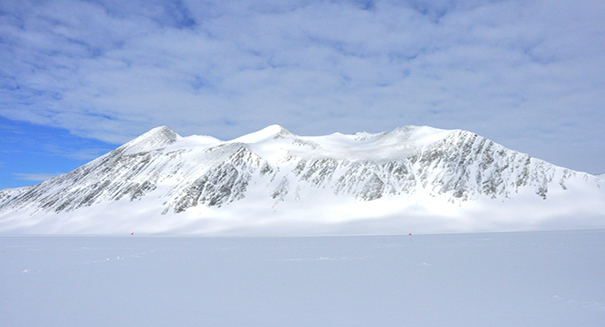
Scientists from Newcastle University, the University of Bristol’s Glaciology Centre, the British Antarctic Survey and the universities of Edinburgh, Exeter, and York recently discovered a trench beneath the ice in Antarctica and, well, it isn’t small. In fact, it’s huge – up to 3 kilometers deep, more than 300 kilometers long and up to 25 kilometers across.
.
According to Professor Martin Siegert, Professor of Geosciences at the University of Bristol, this is something of a watershed moment for scientists studying the Antarctic Ice Sheet. Though scientists have been aware of its cycles of growth and decay for decades, they’ve never been quite clear on a point of origin.
 .
“By looking at the topography beneath the ice sheet using a combination of ice-penetrating radio-echo sounding and satellite imagery, we have revealed a region which possesses classic glacial geomorphic landforms, such as u-shaped valleys and cirques, that could only have been formed by a small ice cap, similar to those seen at present in the Canadian and Russian High Arctic. The region uncovered is, therefore, the site of ice sheet genesis in West Antarctica,” he said.
.
Rather than take to the ice with shovels and picks, the scientists spent three seasons mapping the area using data from satellites and ice-penetrating radar towed behind snowmobiles. In addition to the ancient subglacial trough, they also charted the mountain range known as the Ellsworth Subglacial Highlands.
.
The study offers an exceptional insight into the extent, thickness and behavior of this ancient icefield, and the configuration and behavior of the early West Antarctic Ice Sheet. 
.
The subglacial landscape reveals where and how the West Antarctic Ice Sheet originated and grew. It also offers important clues about the size and shape of the ice sheet in West Antarctica in a warmer global climate.
.
 However, Dr. Neil Ross from Newcastle University notes that there’s much more work to be done if we hope to broaden our understanding of the continent.
.
“To me, this just goes to demonstrate how little we still know about the surface of our own planet. The discovery and exploration of hidden, previously-unknown landscapes is still possible and incredibly exciting, even now,” he said.