The Hellenic Navy (HN) (Greek: Πολεμικό Ναυτικό, Polemikó Naftikó, abbreviated ΠΝ) is the naval force of Greece, part of the Greek Armed Forces. The modern Greek navy has its roots in the naval forces of various Aegean Islands, which fought in the Greek War of Independence. During the periods of monarchy (1833–1924 and 1936–1973) it was known as the Royal Navy (Βασιλικόν Ναυτικόν, Vasilikón Naftikón, abbreviated ΒΝ).The total displacement of all the navy's vessels is approximately 150,000 tons.The motto of the Hellenic Navy is "Μέγα το της Θαλάσσης Κράτος" from Thucydides' account of Pericles' oration on the eve of the Peloponnesian War. This has been roughly translated as "Great is the country that controls the sea". The Hellenic Navy's emblem consists of an anchor in front of a crossed Christian cross and trident, with the cross symbolizing Greek Orthodoxy, and the trident symbolizing Poseidon, the god of the sea in Greek mythology. Pericles' words are written across the top of the emblem. "The navy, as it represents a necessary weapon for Greece, should only be created for war and aim to victory."...............The Hellenic Merchant Marine refers to the Merchant Marine of Greece, engaged in commerce and transportation of goods and services universally. It consists of the merchant vessels owned by Greek civilians, flying either the Greek flag or a flag of convenience. Greece is a maritime nation by tradition, as shipping is arguably the oldest form of occupation of the Greeks and a key element of Greek economic activity since the ancient times. Nowadays, Greece has the largest merchant fleet in the world, which is the second largest contributor to the national economy after tourism and forms the backbone of world shipping. The Greek fleet flies a variety of flags, however some Greek shipowners gradually return to Greece following the changes to the legislative framework governing their operations and the improvement of infrastructure.Blogger Tips and Tricks
This is a bilingual blog in English and / or Greek and you can translate any post to any language by pressing on the appropriate flag....Note that there is provided below a scrolling text with the 30 recent posts...Αυτό είναι ένα δίγλωσσο blog στα Αγγλικά η/και στα Ελληνικά και μπορείτε να μεταφράσετε οποιοδήποτε ποστ σε οποιαδήποτε γλώσσα κάνοντας κλικ στη σχετική σημαία. Σημειωτέον ότι παρακάτω παρέχεται και ένα κινούμενο κείμενο με τα 30 πρόσφατα ποστς....This is a bilingual blog in English and / or Greek and you can translate any post to any language by pressing on the appropriate flag....Note that there is provided below a scrolling text with the 30 recent posts...Αυτό είναι ένα δίγλωσσο blog στα Αγγλικά η/και στα Ελληνικά και μπορείτε να μεταφράσετε οποιοδήποτε ποστ σε οποιαδήποτε γλώσσα κάνοντας κλικ στη σχετική σημαία. Σημειωτέον ότι παρακάτω παρέχεται και ένα κινούμενο κείμενο με τα 30 πρόσφατα ποστς.........

Tuesday, March 2, 2010

Woman died. Refused by 19 hospitals [ 696 ]

The Mainichi Daily News

Lawsuit by family of woman refused by 19 hospitals before death dismissed

Shinsuke Takasaki is pictured during a press conference after the judgment. (Mainichi)

OYODO, Nara -02/03/2010- A judge dismissed a lawsuit on Monday by the family of a woman who fell unconscious during childbirth and died after she was refused treatment by 19 hospitals.

Gojo resident Mika Takasaki, 32, died in August 2006, while being transported in search of a hospital.

Takasaki's family -- husband Shinsuke, 27, and surviving son Kanata, 3 -- filed suit against the town and her obstetrician, demanding approximately 88 million yen in damages.

At issue was whether the obstetrician at the town-run Oyodo Hospital was negligent by failing to perform a cranial CT and misdiagnosing a brain hemorrhage as eclampsia and whether her life could have been saved.

The presiding judge acknowledged that Takasaki complained of a headache at the time of the hemorrhage, at around midnight on Aug. 8, 2006. However, he said: "The obstetrician's decision to place priority on getting her to a suitably-equipped medical institution as fast as possible cannot be deemed inappropriate."

Regarding the connection between Takasaki's death and the length of time she spent in the ambulance, the judge ruled that "even if the brain abnormality had been diagnosed, and she had been taken to Nara Medical University at an early stage, surgery would only have begun at around 3:30 a.m., and her chances of survival would have been very slim."

"There are many cases where hospitals for seriously ill patients have to be found at the spur of the moment. It's 'emergency medicine' in name only," the presiding judge said in a comment following the ruling. "The state and local authorities have a duty to protect lives, and I have high hopes that obstetrics and other forms of emergency medicine will be improved."

Shinsuke Takasaki, who dabbed at his eyes as the ruling was read, showed some understanding of the verdict: "The ruling was a disappointment and I want to apologize to Mika, but the court gave an intelligent opinion."

Shinsuke has called repeatedly for the reform of obstetric care. After launching his lawsuit, he'd become a target for online attacks and libel. But he kept returning to court in the hope that he could tell their son that "because of mommy, maternity care became better."

While disappointed at the result, Shinsuke says he has hopes in light of the judge's additional remarks.

"I felt the burden of Mika's life upon me again. I think I'll be able to explain it to Kanata, I hope the medical world responds quickly and carries out urgent reform of the natal care system," he said.

Attorney Hirotoshi Ishikawa added: "The claim was not sufficiently upheld. However, we have not considered whether to appeal."

Kimiaki Nishiura, head of Oyodo Hospital, said: "As well as high hopes for the improvement of the emergency natal care system, I will work hard to improve all our care."

(Mainichi Japan) March 2, 2010

NASA, The latest Image of the Day [ 695 ]

NASA Image of the Day
The latest NASA "Image of the Day" image.

The Crab Nebula
The Crab Nebula, the result of a supernova noted by Earth-bound chroniclers in 1054 A.D., is filled with mysterious filaments that are are not only tremendously complex, but appear to have less mass than expelled in the original supernova and a higher speed than expected from a free explosion. The Crab Nebula spans about 10 light-years. In the nebula's very center lies a pulsar: a neutron star as massive as the Sun but with only the size of a small town. The Crab Pulsar rotates about 30 times each second. Image Credit: NASA, ESA, J. Hester, A. Loll (ASU)


Τρίτη, 2 Μάρτιος 2010 7:00:00 πμ

Chile : Looting after earthquake [ 694 ]

Chile extends curfew to quell looting after earthquake

Suspected looters caught in Chile

BBC,13:44 GMT, Tuesday, 2 March 2010A curfew in Chile's second city, Concepcion, has been extended until midday (1500 GMT) as troops struggle to contain looting after the earthquake.

Dozens of people were arrested after looters fought over goods and set fire to a department store, officials say.

The authorities have announced the setting up of a special air route to deliver aid from the capital, Santiago, to Concepcion, 430km (270 miles) away.

Saturday morning's 8.8-magnitude earthquake killed at least 723 people.

The deteriorating security situation in Concepcion comes despite the influx of thousands of troops to reinforce local police.

When we have a catastrophe of this magnitude, when there is no electricity and no water, the population... starts losing the sense of public order
President-elect Sebastian Pinera


Many of the city's 500,000 inhabitants are short of food and have seen their water and electricity supplies cut off.

But lorry after lorry loaded with water, food and mattresses is being held up by the military until the curfew is lifted, reports the BBC's Andy Gallacher from the checkpoint on the outskirts of Concepcion.

The main highway in the region is twisted and bent out of shape, but the route remains open, our correspondent says.

Security seems to be the biggest issue holding up rescue efforts, he adds.

Some residents quoted by the Reuters news agency said they were organising groups to defend their property.

President Michelle Bachelet, condemning "pillage and criminality", has sent 7,000 soldiers to the region.

"I want to call to the people's conscience. We must all work together," she said.

Meanwhile, rescuers searching the rubble of a collapsed apartment building in the city in which dozens are feared trapped say they have heard signs of life and are attempting to reach survivors.

Coastal destruction

Reports are beginning to emerge of the scale of the devastation in other areas.

AT THE SCENE
Andy Gallacher
Andy Gallacher, BBC News, near Concepcion

It has taken us about 15 hours of solid driving to get to the outskirts of Concepcion. The main highway is ripped and twisted all the way down from the capital, Santiago.

At a military checkpoint, there are rows and rows of lorries carrying food, fresh water and other emergency supplies.

It appears that there has been a complete breakdown of law and order in Chile's second city.

Some of the communities on the coast near here have meanwhile not yet even been heard from. They were first hit by the earthquake, and then swept away by the tsunami.

A BBC team that reached the town of Curico, between Santiago and Concepcion, found widespread destruction.

Up to 90% of the mud-and-wood buildings in the town's historic centre had been destroyed, and a hospital badly damaged, our reporters said.

However, food and water was being distributed and the situation was comparatively calm, they added.

Some coastal towns and villages were hit by giant waves after the earthquake.

In the fishing village of Constitucion, the mayor said the seafront and centre had been "completely destroyed".

The government admits that its attempts to provide aid swiftly have been hampered by damaged roads and power cuts. The air bridge between Santiago and Concepcion will help the authorities send more than 300 tonnes of aid, including 120 tonnes of food, to the worst affected area of the country.

Communication problems

International aid has begun arriving. Neighbouring Argentina is flying a field hospital over the Andes to Chile and has pledged half a million litres of much-needed drinking water.

AID PLEDGES (in US$)
Australia: $4.5m
European Union: $3m
Japan: $3m
China: $1m

Brazilian President Luiz Inacio Lula da Silva flew to Santiago and offered his nation's support, while US Secretary of State Hillary Clinton will arrive shortly.

Earlier, Mrs Clinton said President Bachelet had initially told her Chile could cope with the disaster, but when the scale of it became apparent she changed her mind.

The Chilean government had requested field hospitals, water purification units and satellite phones, she added.

"One of their biggest problems has been communications," Mrs Clinton told reporters. "They can't communicate into Concepcion and some of the surrounding areas."

Map

After touring the disaster zone, President-elect Sebastian Pinera said the situation was worse than he had expected.

"When we have a catastrophe of this magnitude, when there is no electricity and no water, the population... starts losing the sense of public order," he said.

About two million Chileans are believed to have been affected by Saturday's earthquake, the seventh most powerful on record and the worst disaster to befall Chile in 50 years.

The epicentre of the quake was 115km (70 miles) north-east of Concepcion and 325km south-west of the capital Santiago.

About 1.5 million homes in Chile have been damaged. Most of the collapsed buildings were of older design - including many historic structures.

One US risk assessor, Eqecat, has put the cost of repairing the damage at between $15bn and $30bn (£9.8bn - £19.6bn) or 10-20% of the country's gross domestic product.

EU: Budged Deficit & National Debt[ 693 ]

"Hey, I think the building is moving."[ 692 ]

Survivor recounts Santiago's post-quake chaos

By Kevin Voigt, CNN
March 2, 2010 2:22 a.m. EST
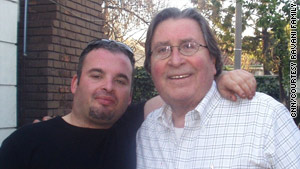
Eduardo Ravani Jr., left, and his father Eduardo Sr. are shown together before the quake.

(CNN) -02-03-2010- Eduardo Ravani Jr. was photographing a wedding reception early Saturday at Las Terrazas dela Reina on the hills overlooking Santiago, Chile, when the party disc jockey told him: "Hey, I think the building is moving."

What started as a slow shake grew into a relentless rumble, knocking Ravani off his feet as screaming guests streamed outside. When Ravani made it outside, he saw five women had fainted to the ground. The bride and groom huddled in a tight embrace, the bride crying. Beyond, bright flashes leapt like lightning from exploding power transformers in the city below.

"It was like something you see in the movies -- one by one, each of the blocks of the city went dark," said the 36-year-old Santiago man, speaking by phone to CNN. "It felt like the shaking would never stop ... then all you heard were people crying and the sound of car alarms and house alarms."

The temblor lasted less than three minutes, but three days later the events of that day continue to reverberate for Ravani and his family, shaken both by daily aftershocks and widespread looting.

More than 700 people have died from the earthquake, and Chilean officials say the toll could climb. Areas of the country were reporting shortages of food and water, and looters roaming city streets, authorities said.

A precarious climate hung over Santiago immediately after the quake, Ravani said. He recounted the days immediately after the quake.

A purse snatcher tried to rob Ravani's wife on Sunday near their home and was stopped by passersby. "She's been terrified and is afraid to leave the house," he said.

Ravani saw a mob storm a quake-damaged store as the owner, "a 60-year-old grandmother," shouted and tried to get the looters to stop, he said.

The quake occurred on the last weekend of the summer holiday in the South American nation, when many Chileans were away on vacation.

"There are a lot of people who went to the beach and haven't been able to get back to their homes, so you hear of a lot of empty homes being broken into," Ravani said.

Ravani himself had little cash as automated teller machines failed through the weekend; when a neighborhood ATM began working again on Monday, he had to stand in line an hour to make a withdrawal.

"The main thing people are concerned about are shortages," Ravani said. He stood in line Monday at a grocery where a woman bought 20 pounds of spaghetti. Lines at his neighborhood gas station were 30 cars deep Monday.

"The government says there is no shortage of gas, but you still see people walking away, filling up plastic containers of gas," Ravani said. With the quake happening two weeks before the new president takes power, the credibility of government statements are sometimes called into question, he said.

"You hear the old government say one thing, the incoming president say something else," he said.

Still, Ravani -- a part-time photographer and full-time English instructor at the Wall Street Institute in Santiago -- considers himself lucky. In the moments after the quake, his thoughts turned to the safety of his wife, Dora, and their daughters Ayelet, 10, and Francesca, 8.

"After a few minutes, everyone collected themselves, and I drove home," he said. The typically 10-minute drive took nearly an hour as he drove through darkened streets, across electrical wires and debris, as the sirens of emergency vehicles filled the air.

When he got to his apartment, people were milling on the street, as car headlights and flashlights provided the only light. He searched for his family, but it was his daughters who first saw him in the strobe of a passing car and screamed, "Daddy, Daddy, Daddy!"

"They started crying hysterically," Ravani said. "My wife said they were mute after the earthquake occurred. They had never been through anything like that before."

On Monday, his daughters were supposed to return to school after their summer break. "Obviously, that didn't happen," he said.

"More than anything, I'm concerned about the safety of my family, and my family getting their life back on track."