The Hellenic Navy (HN) (Greek: Πολεμικό Ναυτικό, Polemikó Naftikó, abbreviated ΠΝ) is the naval force of Greece, part of the Greek Armed Forces. The modern Greek navy has its roots in the naval forces of various Aegean Islands, which fought in the Greek War of Independence. During the periods of monarchy (1833–1924 and 1936–1973) it was known as the Royal Navy (Βασιλικόν Ναυτικόν, Vasilikón Naftikón, abbreviated ΒΝ).The total displacement of all the navy's vessels is approximately 150,000 tons.The motto of the Hellenic Navy is "Μέγα το της Θαλάσσης Κράτος" from Thucydides' account of Pericles' oration on the eve of the Peloponnesian War. This has been roughly translated as "Great is the country that controls the sea". The Hellenic Navy's emblem consists of an anchor in front of a crossed Christian cross and trident, with the cross symbolizing Greek Orthodoxy, and the trident symbolizing Poseidon, the god of the sea in Greek mythology. Pericles' words are written across the top of the emblem. "The navy, as it represents a necessary weapon for Greece, should only be created for war and aim to victory."...............The Hellenic Merchant Marine refers to the Merchant Marine of Greece, engaged in commerce and transportation of goods and services universally. It consists of the merchant vessels owned by Greek civilians, flying either the Greek flag or a flag of convenience. Greece is a maritime nation by tradition, as shipping is arguably the oldest form of occupation of the Greeks and a key element of Greek economic activity since the ancient times. Nowadays, Greece has the largest merchant fleet in the world, which is the second largest contributor to the national economy after tourism and forms the backbone of world shipping. The Greek fleet flies a variety of flags, however some Greek shipowners gradually return to Greece following the changes to the legislative framework governing their operations and the improvement of infrastructure.Blogger Tips and Tricks
This is a bilingual blog in English and / or Greek and you can translate any post to any language by pressing on the appropriate flag....Note that there is provided below a scrolling text with the 30 recent posts...Αυτό είναι ένα δίγλωσσο blog στα Αγγλικά η/και στα Ελληνικά και μπορείτε να μεταφράσετε οποιοδήποτε ποστ σε οποιαδήποτε γλώσσα κάνοντας κλικ στη σχετική σημαία. Σημειωτέον ότι παρακάτω παρέχεται και ένα κινούμενο κείμενο με τα 30 πρόσφατα ποστς....This is a bilingual blog in English and / or Greek and you can translate any post to any language by pressing on the appropriate flag....Note that there is provided below a scrolling text with the 30 recent posts...Αυτό είναι ένα δίγλωσσο blog στα Αγγλικά η/και στα Ελληνικά και μπορείτε να μεταφράσετε οποιοδήποτε ποστ σε οποιαδήποτε γλώσσα κάνοντας κλικ στη σχετική σημαία. Σημειωτέον ότι παρακάτω παρέχεται και ένα κινούμενο κείμενο με τα 30 πρόσφατα ποστς.........

Tuesday, October 9, 2012

Curiosity's First Scoop ...[ 2960 ]

View of Curiosity's First Scoop Also Shows Bright Object


This image from the right Mast Camera (Mastcam) of NASA's Mars rover Curiosity shows a scoop full of sand and dust lifted by the rover's first use of the scoop on its robotic arm. In the foreground, near the bottom of the image, a bright object is visible on the ground. The object might be a piece of rover hardware.
--› Related video
 
This image was taken during the mission's 61st Martian day, or sol (Oct. 7, 2012), the same sol as the first scooping. After examining Sol 61 imaging, the rover team decided to refrain from using the arm on Sol 62 (Oct. 8). Instead, the rover was instructed to acquire additional imaging of the bright object, on Sol 62, to aid the team in assessing possible impact, if any, to sampling activities.
For scale, the scoop is 1.8 inches (4.5 centimeters) wide, 2.8 inches (7 centimeters) long.

Image credit: NASA/JPL-Caltech/MSSS

Monday, October 8, 2012

SpaceX lift-off...[ 2959 ]

SpaceX lift-off: first commercial cargo ship successfully blasts into space

SpaceX's commercial cargo ship rocketed into orbit in pursuit of the International Space Station, the first of a dozen supply runs under a mega-contract with Nasa.

SpaceX's commercial cargo ship rocketed into orbit in pursuit of the International Space Station, the first of a dozen supply runs under a mega-contract with Nasa.  


The SpaceX Falcon 9 rocket lifts off from Space Launch Complex 40 at the Cape 
Canaveral Air Force Station in Cape Canaveral, Florida  Photo: Reuters/AP


It was the second launch of a Dragon capsule to the orbiting lab by the California-based SpaceX company. The first was last spring. 
-
This time was no test flight, however, and the spacecraft carried 453.6 kilograms of key science experiments and other precious gear on this truly operational mission. There was also a personal touch: chocolate-vanilla swirl ice cream tucked in a freezer for the three station residents. 
-
The company's unmanned Falcon rocket roared into the night sky right on time, putting SpaceX on track to reach the space station on Wednesday. The complex was soaring southwest of Tasmania when the Falcon took flight. 
-
Officials declared the launch a success, despite a problem with one of the nine first-stage engines. The rocket put Dragon in its intended orbit, said the billionaire founder and chief executive officer of SpaceX, Elon Musk.
"It's driving its way to station, so that's just awesome," noted SpaceX President Gwynne Shotwell.
-
more

SpaceX lift-off: first commercial cargo ship successfully blasts into ...


Hugo Chavez Wins Re-Election ...[ 2958 ]

Venezuelan President Hugo Chavez Wins Re-Election Bid

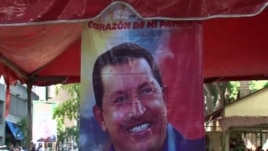
A Chavez electoral poster in Caracas

Brian Padden //October 08, 2012 

Sunday, October 7, 2012

Escape from North Korea...[ 2957 ]

North Korean soldier shoots comrades, defects to South

By Ben Brumfield and KJ Kwon, CNN
October 6, 2012 -- Updated 1415 GMT (2215 HKT)
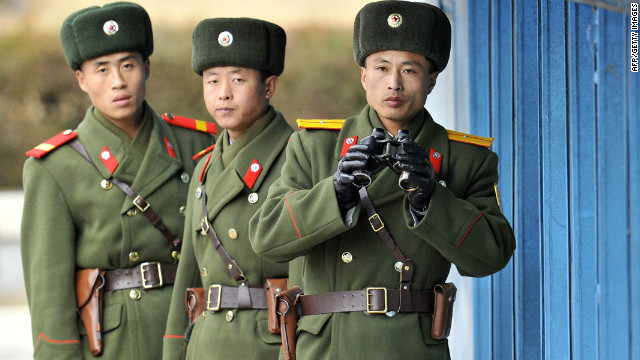
North Korean soldiers look at South Korea across the Korean Demilitarized Zone (DMZ).

(CNN) -- A North Korean soldier on guard duty at the border dividing the two Koreas defected, telling authorities who received him in the South that he killed his superiors before fleeing across the Military Demarcation Line.
South Korean soldiers at their guard posts reported hearing gunfire before he crossed into the South shortly after noon local time, according to a news release from South Korea's Joint Chiefs of Staff.
-
Soldiers in the South took the defector in on their side of the border and brought him to a safe place for questioning then tightened security in the area.
The North Korean said that "while he was on guard duty, he killed his platoon and squad leaders and defected thereafter," the JCS said.
-
Defections over land through the heavily armed and fortified Demilitarized Zone (DMZ) are rare, as most fleeing the communist North prefer the greater odds of success of crossing by sea.
-
"The last North Korean soldier who defected (over land) was in March 2010," said a spokesman from the defense ministry in Seoul.
But with his comrades dead and no longer capable of hindering him, it was easy for the soldier to flee south.
-
"The distance between the North Korean guard post and the South Korean guard post is 500 meters," the official said, who asked not to be named, because he is not authorized to speak with the media.
More than 24,000 refugees have entered the South from the North since the country's division, according to the Ministry of Unification in Seoul, over two-thirds of them women.
The annual number of refugees has climbed steadily from less than 100 in the 1990s to more than 2,000 per year since 2006.

Saturday, October 6, 2012

Presidential election in Venezuela ...[ 2956 ]


'Vota por ti': The three words that can save Venezuela

By Diego Arria/Published October 06, 2012/FoxNews.com

  10042012venezuela4.jpg
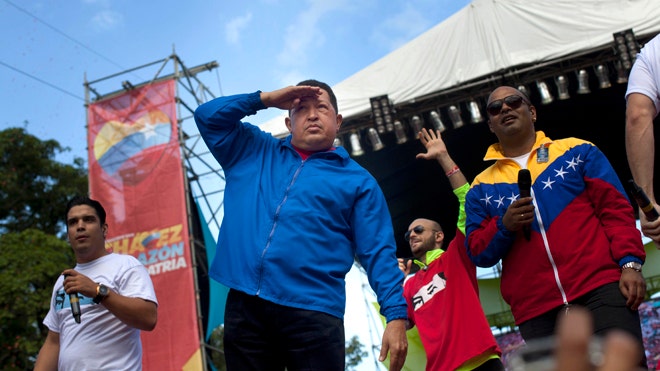
  Venezuela's President Hugo Chavez, front, gestures during a campaign rally in Maracay, Venezuela. (AP)
 

As this Sunday's presidential election in Venezuela looms, voters are daring to think the unthinkable: the fourteen year reign of Hugo Chavez may finally be coming to an end.

Credit for this groundbreaking change in attitude goes to one man-the opposition candidate Henrique Capriles. Capriles is a democrat who believes in the rule of law. I can personally attest to his good character and his heartfelt desire to change Venezuela for the better. I was at school with Capriles' father and I know the family well. Henrique may be only 40 years old, but he has the potential to be a great president.

Especially in the last few weeks, Capriles has enjoyed a remarkable surge in the opinion polls. These same polls show that around 20 percent of voters remain "undecided." When Venezuelans tick that particular box, it's because they are wary of confessing their voting intentions to a pollster, in case the Chavez regime fnds out and penalizes them. And that is precisely why the Capriles campaign can expect strong support from this particular pool of voters, who have the potential to swing the election in his favor.

What is Capriles' secret? A few weeks ago, I joined him for a public meeting in which he unveiled his plans-in the event that he is elected–for his first one hundred days in power. What struck me most was a short and simple phrase that he used. Asked by a journalist why Venezuelans should vote for him, he answered by saying that every ballot cast in his favor is a ballot in favor of the voter too. "Vota por ti," Capriles said. Or, in English: "Vote for you."

If an American politician uttered a phrase like this one, it might come across as a cheap ploy to win votes. However, in the Venezuelan context, those three words sing with hope.

Under Chavez, the Venezuelan people have been told to vote for revolution, not themselves.

Along comes Capriles, and we start to hear about policies that can make an actual difference to our lives. With the country groaning under the $140 billion of debt accumulated under the Chavez regime, Capriles emphasizes the importance of reforming our state-owned oil industry, which accounts for 95 per cent of our foreign export earnings. His message is that these revenues need to spent for the benefit of the Venezuelan people, instead of being wasted on the pet political projects of Chavez. These include giving free oil to Cuba and Nicaragua, buying arms from Russia, and cultivating alliances with brutal tyrannies like Iran and Syria.

Capriles has run a unique campaign which has involved going to the cities, towns and villages of this country to listen to the people directly. And here is what they have been telling him:

In the face of growing lawlessness, crime and gang-related violence, Venezuelans want security. Our murder rate, at 69 per 100,000, is the highest in the world. A Capriles administration will tackle the root causes of crime: lack of educational and career opportunities, the need for police reform, rampant corruption in the Chavez-controlled judicial system, and overcrowded, dangerous prisons that become incubators of crime rather than centers of rehabilitation.

In the face of growing impoverishment, Venezuelans want jobs and economic opportunities.  More than 27 percent of Venezuelans live below the poverty line. A grave crisis in housing, frequent power cuts and even food shortages are established facts of life. Under Capriles, a strategy of economic reform will do away with the nepotism and corruption that has destroyed our economy.

In the face of a regime that regards itself as above the law, Venezuelans want their representatives to be governed by the rule of law. Freedom of speech and of the media is subject to the whims of Chavez and his cronies; private media outlets are fined, suspended and even closed down, while the government pushes it propaganda through its network of 244 radio stations and 36 TV channels. Under a Capriles presidency, Venezuela will benefit from democratic values, and not just democratic procedures.

Chavez knows that the message of Capriles is getting through. That is why he is responding with threats. “They (the opposition) are getting ready to cry fraud and reject the people’s triumph. I advise them not to dare,” Chavez barked at a recent rally in the city of Merida. This was a veiled reference to the militias that Chavez himself has armed, who may well play a similar role to that of the Basij militia in Iran when Chavez's good friend, the Iranian President Mahmoud Ahmadinejad, stole the 2009 election.

Which is why I say to the outside world, if Chavez decides he prefers bullets to ballots, you cannot say you were not warned.

Diego Arria is a former Ambassador of Venezuela to the United Nations, and chief spokesman of freevenezuela.org, an international campaign to support the Venezuelan opposition.

Read more: http://www.foxnews.com/opinion/2012/10/06/vota-por-ti-three-words-that-can-save-venezuela/#ixzz28VzU6qlD