The Hellenic Navy (HN) (Greek: Πολεμικό Ναυτικό, Polemikó Naftikó, abbreviated ΠΝ) is the naval force of Greece, part of the Greek Armed Forces. The modern Greek navy has its roots in the naval forces of various Aegean Islands, which fought in the Greek War of Independence. During the periods of monarchy (1833–1924 and 1936–1973) it was known as the Royal Navy (Βασιλικόν Ναυτικόν, Vasilikón Naftikón, abbreviated ΒΝ).The total displacement of all the navy's vessels is approximately 150,000 tons.The motto of the Hellenic Navy is "Μέγα το της Θαλάσσης Κράτος" from Thucydides' account of Pericles' oration on the eve of the Peloponnesian War. This has been roughly translated as "Great is the country that controls the sea". The Hellenic Navy's emblem consists of an anchor in front of a crossed Christian cross and trident, with the cross symbolizing Greek Orthodoxy, and the trident symbolizing Poseidon, the god of the sea in Greek mythology. Pericles' words are written across the top of the emblem. "The navy, as it represents a necessary weapon for Greece, should only be created for war and aim to victory."...............The Hellenic Merchant Marine refers to the Merchant Marine of Greece, engaged in commerce and transportation of goods and services universally. It consists of the merchant vessels owned by Greek civilians, flying either the Greek flag or a flag of convenience. Greece is a maritime nation by tradition, as shipping is arguably the oldest form of occupation of the Greeks and a key element of Greek economic activity since the ancient times. Nowadays, Greece has the largest merchant fleet in the world, which is the second largest contributor to the national economy after tourism and forms the backbone of world shipping. The Greek fleet flies a variety of flags, however some Greek shipowners gradually return to Greece following the changes to the legislative framework governing their operations and the improvement of infrastructure.Blogger Tips and Tricks
This is a bilingual blog in English and / or Greek and you can translate any post to any language by pressing on the appropriate flag....Note that there is provided below a scrolling text with the 30 recent posts...Αυτό είναι ένα δίγλωσσο blog στα Αγγλικά η/και στα Ελληνικά και μπορείτε να μεταφράσετε οποιοδήποτε ποστ σε οποιαδήποτε γλώσσα κάνοντας κλικ στη σχετική σημαία. Σημειωτέον ότι παρακάτω παρέχεται και ένα κινούμενο κείμενο με τα 30 πρόσφατα ποστς....This is a bilingual blog in English and / or Greek and you can translate any post to any language by pressing on the appropriate flag....Note that there is provided below a scrolling text with the 30 recent posts...Αυτό είναι ένα δίγλωσσο blog στα Αγγλικά η/και στα Ελληνικά και μπορείτε να μεταφράσετε οποιοδήποτε ποστ σε οποιαδήποτε γλώσσα κάνοντας κλικ στη σχετική σημαία. Σημειωτέον ότι παρακάτω παρέχεται και ένα κινούμενο κείμενο με τα 30 πρόσφατα ποστς.........

Friday, February 11, 2011

Mubarak Steps Down...[ 2093 ]

Egyptian President Hosni Mubarak Steps Down

BRAKING NEWS
Published February 11, 2011
  FoxNews.com
DEVELOPING: CAIRO -- Egyptian President Hosni Mubarak has stepped down and handed control to the military, Vice President Omar Suleiman said in an address on state television Friday.
Car horns were heard and Egyptian flags were waving in celebration after Suleiman made the announcement.
"In these difficult circumstances that the country is passing through, President Hosni Mubarak has decided to leave the position of the presidency," Suleiman said. He has commissioned the armed forces council to direct the issues of the state."
Nobel Peace laureate and leading Egyptian democracy advocate Mohamed ElBaradei applauded Mubarak's resignation.
"This is the greatest day of my life," he told the Associated Press. "The country has been liberated after decades of repression."
ElBaradei said he expects a "beautiful" transition of power.
Refresh for further updates. Read the earlier story below:
As protesters filled Tahrir Square in another day of demonstrations, an Israeli military intelligence official told Fox News that President Mubarak has left Cairo via helicopter, and was headed to his residence in Sharem a-Sheikh, a resort town in Egypt.
The development comes a day after the embattled leader told protesters he planned to stay in office until the country’s upcoming elections in September. Mubarak will make an "important" statement later Friday, according to reports on state TV. 
U.S. State Department officials, however, expect Vice President Omar Suleiman to release a statement within hours.
More than 20,000 protesters gathered in front of the president's palace in Heliopolis, just outside Cairo. Army officials offered the protesters food amid a jubilant atmosphere, Fox News in Egypt reports.
Meanwhile, the recently-appointed general secretary of Egypt's ruling National Democratic Party said on Friday he had resigned, Reuters reports.
"It's a resignation from the position and from the party," Hossam Badrawi told al-Hayat TV. "The formation of new parties in a new manner that reflects new thinking is better for society now at this stage."
Badawi was appointed on Feb. 5 as secretary-general in a purge of unpopular figures as Mubarak, the official head of the party, endured massive protests against his rule.
Many opponents have made it clear that they want Mubarak and his authoritarian regime to step down immediately.
The statement by the Armed Forces Supreme Council -- its second in two days -- was a blow to many protesters who had called on the military to take action to push out Mubarak after his latest refusal to step down.
But soldiers also took no action to stop demonstrators from massing outside the palace and the headquarters of state television, indicating they were trying to avoid another outbreak of violence.
"We expected the army's decision, we always knew that it was behind Mubarak. But we know it's not going to harm us," Safi Massoud said as she joined thousands of people packed into Cairo's central Tahrir Square. "We wont leave until we choose a transition president. We don't want Mubarak, we don't want Suleiman."
Anti-government protesters said they were more determined than ever as the uprising entered its 18th day.
The military statement endorsed Mubarak's plan to transfer some powers to Suleiman and promised free and fair presidential elections later this year.
It also promised that the hated emergency laws, in force since Egypt's authoritarian ruler came to office in 1981, would be lifted and gave a somewhat more specific timeframe than Mubarak had offered in his Thursday night speech.
The military implied they would be lifted when protests end, saying it could happen "when the current security situation permits."
It also called for public services to resume and urged "the return of normal life in order to safeguard the achievements of our glorious people."
Undaunted, thousands packed into Cairo's central Tahrir Square, or Liberation Square, which has been the center of the uprising since it began on Jan. 25.
A few hundred protesters also assembled outside the gate of Mubarak's Oruba Palace. The palace was protected by four tanks and rolls of barbed wire, but soldiers were doing nothing to stop demonstrators from joining the rally and chanting anti-Mubarak slogans.
The Associated Press contributed to this report.

Thursday, February 10, 2011

NASA Image of the Day, Feb 10th ..[ 2092 ]

The latest NASA "Image of the Day" image.

.
Dextre, the Canadian Space Agency's robotic "handyman", is featured in this image photographed by an Expedition 26 crew member aboard the International Space Station on Feb. 3, 2011. 
 -
Dextre completed its first real job since the robot passed its final exam in December 2010, unpacking two critical pieces of equipment delivered by the unpiloted Japanese Kounotori2 H-II Transfer Vehicle (HTV2) spacecraft - the space equivalent of a moving van. 
 -
HTV2 is the second unpiloted cargo ship launched by JAXA, the Japanese Space Agency, to the station and delivered more than four tons of food and supplies to the station and its crew members. 
 
Image Credit: NASA
Πέμπτη, 10 Φεβρουάριος 2011 7:00:00 πμ

Japan: Northern Territories dispute with Russia...[ 2091 ]

News Navigator: What's behind the Northern Territories dispute with Russia?

A sign on the eastern coast of Hokkaido declaring Japanese sovereignty over Kunashiri Island, visible in the distance. (Mainichi)
(Mainichi Japan) 
February 10, 2011
The Mainichi answers common questions readers may have about sovereignty over the Northern Territories, islands north of Hokkaido now under the control of Russia but claimed by Japan.
Question: Feb. 7 is Northern Territories Day in Japan, right? Why that day in particular?
Answer: Because Feb. 7 is the anniversary of the signing of an 1855 friendship treaty between Imperial Russia and the Tokugawa government. Under this treaty, the border between the two countries was set between the islands of Etorofu and Urup. The Northern Territories -- Etorofu, Kunashiri, Habomai, and Shikotan islands -- are now under Russian control, and the 1855 treaty forms the root of Japan's argument for reclaiming them.
They fell under Russian dominion in late August and early September 1945 when Soviet forces occupied the islands just after Japan's surrender in World War II. The Japanese government established Northern Territories Day in 1981, to stir up public support for the islands' return.
Q: What has Russia said in response to the Japanese claim?
A: The official stance of the Soviet Union was that there was no dispute over the Northern Territories. However, the new Russian government that emerged from the ruins of the Soviet Union in 1993 agreed to settle the question of sovereignty over the islands in the bilateral "Tokyo Declaration." That is, Russia agreed that there was in fact a sovereignty dispute.
A boat sails through the Nemuro Strait, with Kunashiri Island's Mt. Rausu in the background. The strip of white at the bottom of the island is an iceberg. (Mainichi)
Q: Okay. But hasn't the Japanese government insisted there is no territorial dispute over the Senkaku Islands in Okinawa Prefecture? China certainly seems to think there is.
A: That is very true. China and Taiwan both claim the Senkakus, hoping to gain control of the natural resources around the islands. However, Japan has denied there is any sovereignty question, saying the country does not have any territorial quarrels with its neighbors.
Q: So, how do we tell if there is or is not a sovereignty dispute over a certain area, officially speaking?
A: Well, if the territory in question is currently under Japanese control, then there's officially no dispute. That, as far as Japan is concerned, is where you draw the dividing line.
.
For example, at the moment the Senkaku Islands are uninhabited, but they are privately owned and are therefore subject to Japanese asset taxes. Furthermore, the seas around the islands are patrolled by the Japan Coast Guard as Japanese territorial waters. In these ways, as well as under the law, Japan has actual control of the Senkakus. Therefore, Japan insists there is no question of sovereignty over those islands.
.
On the other hand, the Northern Territories are under actual Russian control, in defiance of Japanese claims, and therefore there is a sovereignty question. The same holds for Takeshima Islands, called Dokdo Islands in Korean, which Japan considers a part of Shimane Prefecture but which are host to a permanent Korea Coast Guard presence, effectively putting it under South Korean control.
In short, the Japanese government demands recognition of sovereignty claims -- both from the other government involved and in the realm of international public opinion -- when the relevant territory is under the control of another state, such as Takeshima and the Northern Territories. If, however, the disputed territory is held by Japan, then the Japanese government does not admit of any questions of sovereignty.

Q: Will these conflicts ever be resolved?
A: There are examples of successful political resolutions to territorial disputes, such as a 2004 agreement between Russia and China that divided the land in question between the two countries and fixed a mutually acceptable border. Any territorial dispute could be a tricky one to settle, tangled up as it is with national sentiment and resource concerns. However, if a resolution is to be achieved, it will come through diplomatic perseverance. (Answers by Shinichiro Nishida, Political News Department)

(Mainichi Japan) February 10, 2011

Wednesday, February 9, 2011

NASA Image of the Day, Feb 9th ..[ 2090 ]

The latest NASA "Image of the Day" image.

.
Students from Ferebee-Hope Elementary School in Washington, D.C., take turns trying on a glove from a space suit on Tuesday, Feb. 8, 2011. 
 
Ferebee-Hope Elementary School, in collaboration with Reading is Fundamental, hosted this event in honor of Black History Month, and to highlight the importance of reading. NASA Associate Administrator for Education and STS-129 astronaut Leland Melvin read to first and third grade students at the school from the book The Moon Over Star during the event.  
 
Image Credit: NASA/Carla Cioffi
Τετάρτη, 9 Φεβρουάριος 2011 7:00:00 πμ

Pirates attacked .Greek Oil Tanker....[ 2089 ]

Greek-flagged tanker hijacked

By the CNN Wire Staff
February 9, 2011 7:17 a.m. EST
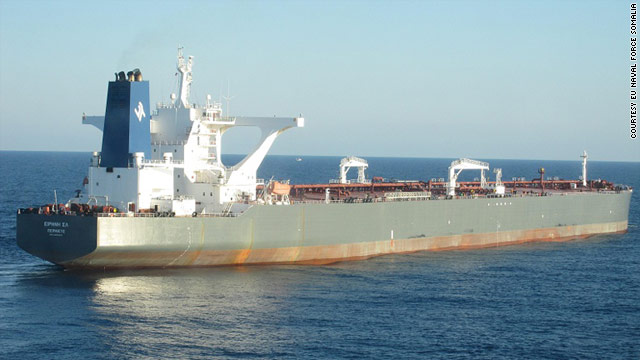
The Greek-flagged MV Irene SL (pictured) is the second major oil tanker in two days to be hijacked by pirates.
STORY HIGHLIGHTS
  • It's the second hijacking in two days
  • The latest occurred about 350 nautical miles southeast of Muscat
  • The tanker's crew numbers 25 people

Video:

  1. Pirates  +  Video

  2. Arabian Sea + Video


London (CNN) -- A tanker was hijacked on Wednesday in the North Arabian Sea, the European Union Naval Force said.
The MV Irene SL, a Greek-flagged and Panamanian owned tanker, had been headed from Fujairah in the United Arab Emirates to the Egyptian port of Suez when it was attacked.
The incident took place about 350 nautical miles southeast of the Omani city of Muscat. The crew consists of 17 Filipinos, seven Greeks, and a Georgian.
A Greek Merchant Marine Ministry spokesman said the ship was carrying 266,000 tons of crude oil.

There has been no communication with the ship, Greek and EUNAVFOR officials said.
On Tuesday, pirates in the Indian Ocean attacked and boarded an Italian flagged and owned oil tanker. That incident occurred 670 nautical miles east of Yemen's Socotra Island.